The Marshalsea Prison
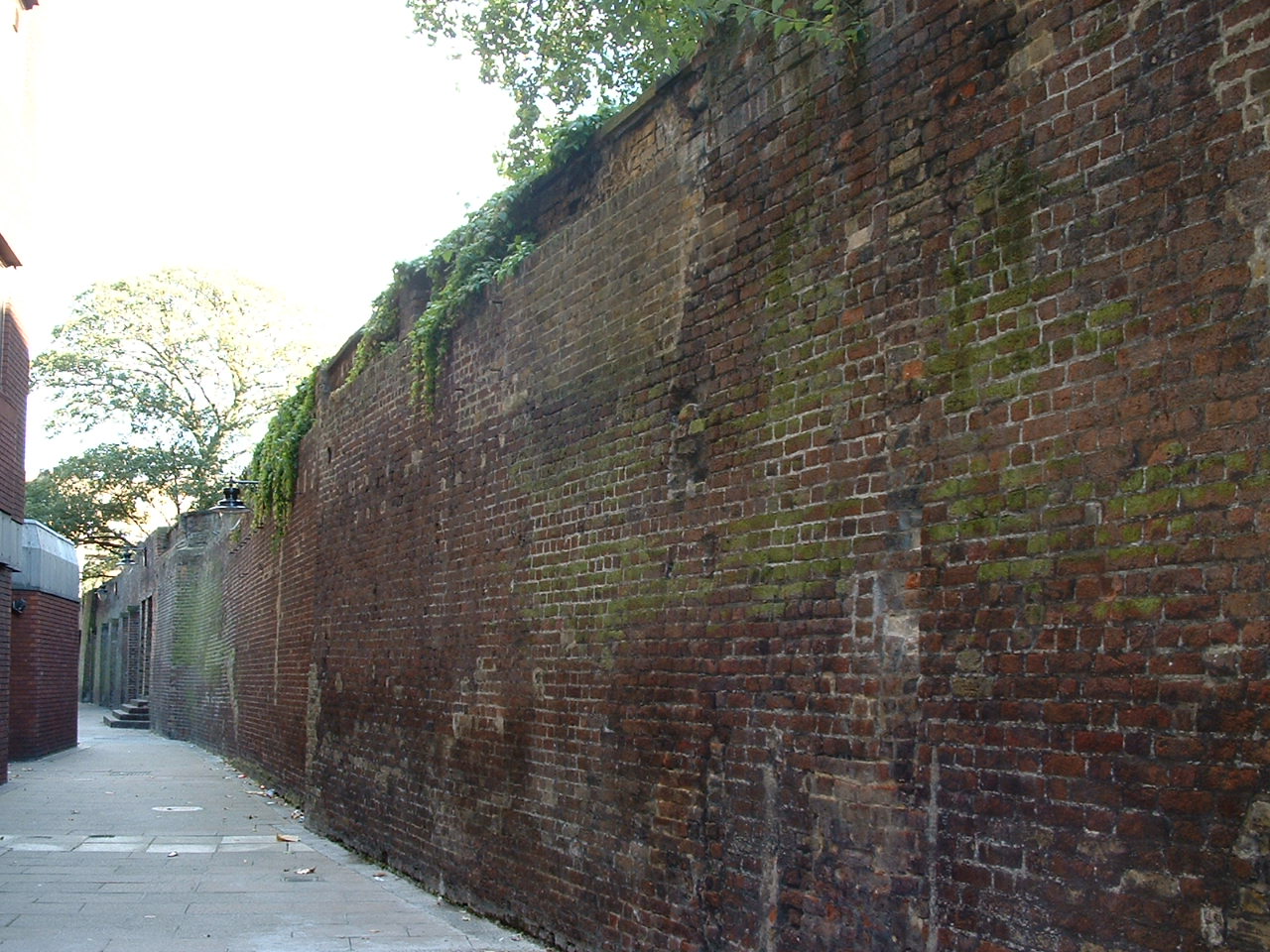
This length of wall is all that remains of the Marshalsea Prison for debtors
"Stone walls do not a prison make,
nor iron bars a cage."
Just alongside the busy Borough High Street, by the rear of St. George’s Church, stood for many years the smallest of our debtors’ prisons, the Marshalsea.
Charles Dickens' father, John Dickens, was incarcerated here for debt in 1824. Charles was only 12 years old at the time. This was to become Dickens' worst memory, which was to haunt him for the rest of his life. He was put into lodgings at nearby Lant Street, and sent out to work in a blacking factory, on the north bank of the Thames, site of a present-day foot of Hungerford Bridge.
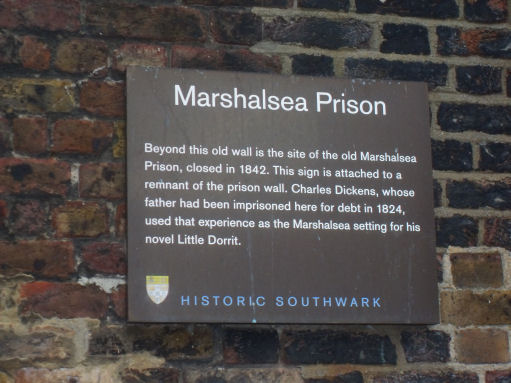
The Marshalsea dates from medieval times and closed in 1842, being demolished soon afterwards. All that is left to be seen of this once notorious debtors' prison is this length of the wall in Angel Court.
A description of this passageway is best left to Charles Dickens himself; 'Wandering, however, down a certain adjacent Angel Court, leading to Bermondsey, I came to Marshalsea Place, the houses in which I recognised, not only as the great block of the former prison but as preserving the rooms that arose in my mind's eye when I became Little Dorrit's biographer.... Whosoever goes into Marshalsea Place, turning out of Angel Court, leading to Bermondsey, will find his feet on the very paving-stones of the extinct Marshalsea Goal; will see its narrow yard to the right and to the left, very little altered if at all, except that the walls were lowered when the place got free; will look upon the rooms in which the debtors lived; will stand among the crowded ghosts of many miserable years.' While Dickens' father was in the Marshalsea a Mr Dorrett of Rochester was on the King's Bench. John Dickens may have known him at Chatham. 'Dorrett' is in the Dickens memorandum book, and there can be no doubt how the name 'Little Dorrit' was derived.
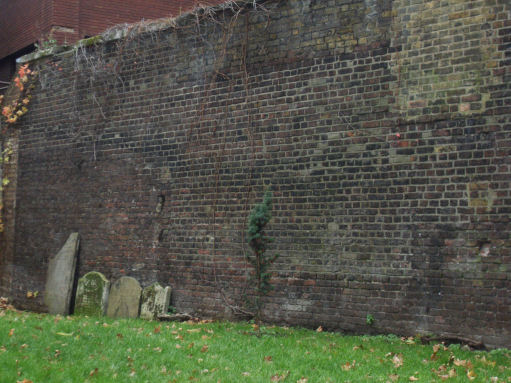
Gravestones of debtors line the outside prison wall in St George’s graveyard
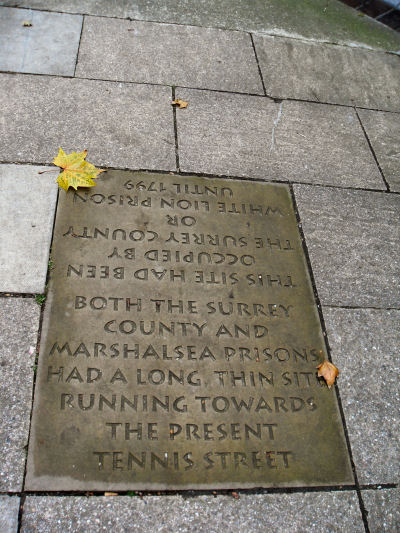
Original prison paving stone with inscriptions
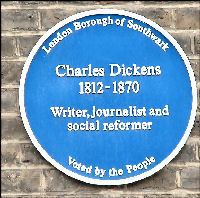
The blue plaque displayed on a wall in Lant Street, close to the Marshalsea Prison, is all that remains to remind us of the place where Charles Dickens lived during his father’s incarceration. ‘There are my lodgings, Lant Street, Borough; it's handy for me you know. Little distance after you've passed St George's Church - turns out of the High Street on the right-hand side of the way.' ‘I shall find it,' said Mr Pickwick.
Dickens also referred to Lant Street in Sketches by Boz when he described the Tuggs family as living in a 'narrow street on the Surrey side of the water within three minutes' walk of old London Bridge.'
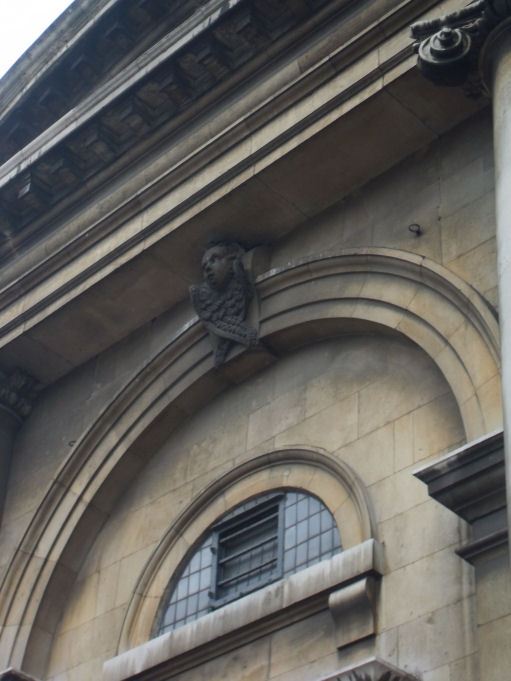
Stone face looking on those entering the steps to St George the Martyr, the Marshalsea Parish Church
London Time

Follow Us
The contents of this website are the property of knowledgeoflondon.com and therefore must not be reproduced without permission. Every effort is made to ensure the details contained on this website are correct, however, we cannot accept responsibility for errors and omissions.
© Copyright 2004 -
Contact Us | Advertise



